Gift-giving between romantic partners is frequently misunderstood as a test of effort, devotion, or financial sacrifice. Popular culture often frames gifts as proof—proof of love, proof of seriousness, proof that one partner values the other “enough.” However, decades of research in relationship psychology and consumer behavior suggest a very different interpretation. Effective gifting functions less as proof and more as alignment. A good gift does not attempt to demonstrate intensity; it demonstrates understanding.
At its core, gifting is a communicative act. Every gift carries implicit information about how well one partner perceives the other’s needs, routines, and emotional world. In this sense, gifts operate as signals—not of how much one is willing to give up, but of how accurately one can attune to another person.
Gifts as Signals of Attunement, Not Sacrifice
From a signaling-theory perspective, the most credible signals are not those that are merely costly, but those that are difficult to fake. Extravagant spending is easy to imitate; genuine understanding is not. This explains why a modest but precisely chosen gift often feels more meaningful than an expensive but generic one.
Relationship research consistently shows that perceived understanding—feeling “seen” by one’s partner—is one of the strongest predictors of long-term satisfaction. Gifts that integrate smoothly into a partner’s daily life, habits, or preferences communicate this understanding far more effectively than gifts chosen for spectacle.
For example, an object that supports how a partner relaxes, works, or unwinds after stress signals attentiveness to their lived experience. Such gifts communicate: I notice how you live, not just how you celebrate. This is why everyday-integrated gifts often outperform symbolic luxury items in emotional impact.
Why Emotional Timing Matters More Than the Calendar
Another common misconception is that gifts derive their meaning primarily from formal occasions. While holidays and anniversaries provide cultural structure, psychological research suggests that emotional timing often outweighs calendar timing.
Gifts given during periods of transition—stress, uncertainty, relocation, career shifts, illness, or emotional vulnerability—carry disproportionate weight. They function as emotional stabilizers, signaling support when verbal reassurance alone may feel insufficient or awkward.
This does not mean that frequent gifting is necessary or desirable. Rather, it highlights the value of situational awareness. A well-timed gift can reinforce emotional security by demonstrating that one partner is attentive not only to dates, but to internal states.
Gifts as Builders of Shared Rituals
One of the most underappreciated functions of gifts in romantic relationships is their role in creating rituals. Behavioral science shows that small, repeatable rituals—shared coffee routines, evening walks, weekly check-ins—play a critical role in sustaining intimacy.
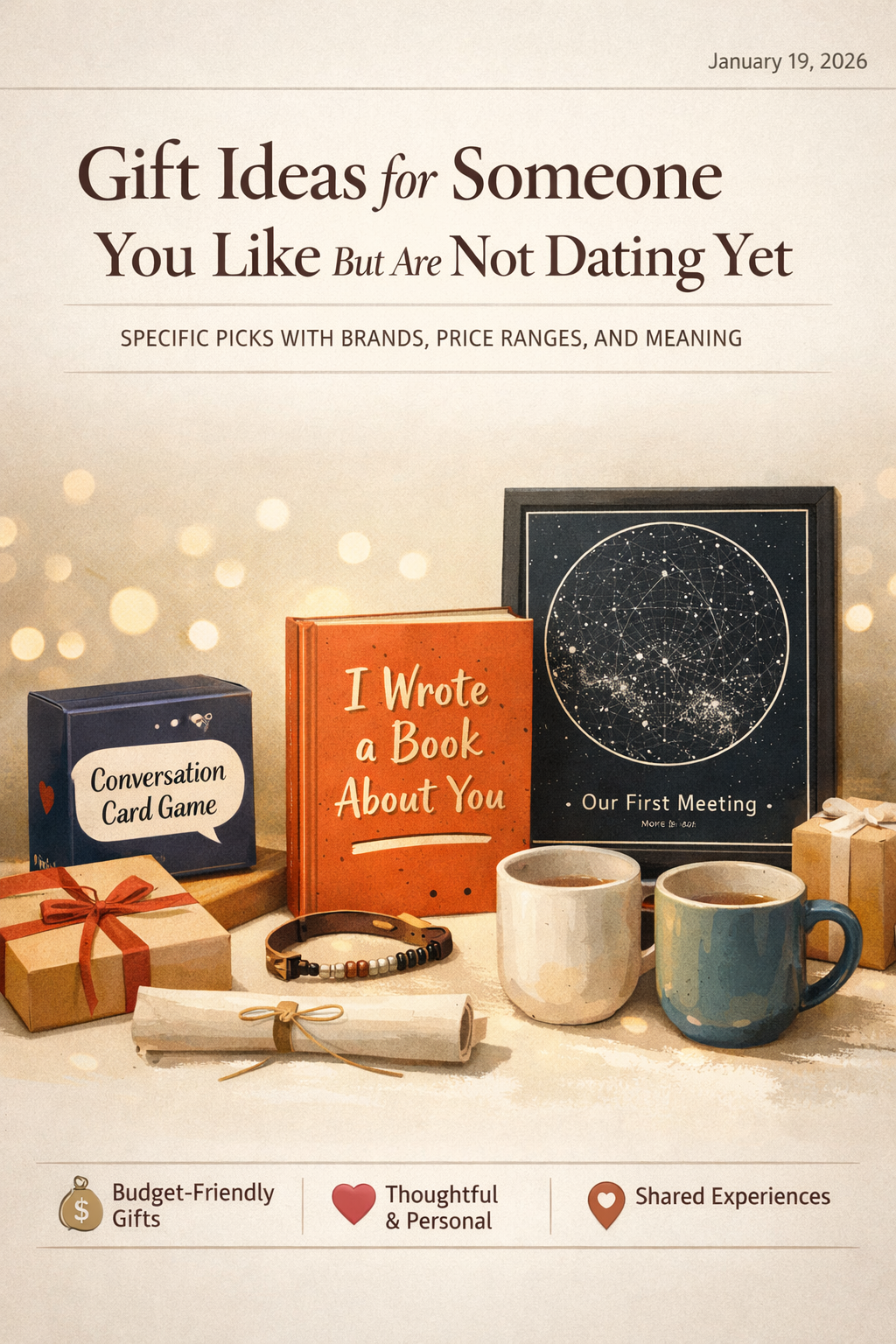
Certain gifts naturally invite repetition. A tea set used every evening, a candle lit during shared downtime, or an object associated with a weekly habit can quietly evolve into a ritual anchor. Over time, the ritual becomes more important than the gift itself, but the gift remains the point of origin.
From a philosophical standpoint, these gifts are powerful because they transform a single gesture into an ongoing practice. They extend meaning forward in time rather than concentrating it in one moment.
Memory Anchors and the Materialization of Time
Romantic relationships are not static; they are narratives unfolding across years. Some gifts function as memory anchors, materializing shared moments and allowing couples to revisit them.
Psychological research on nostalgia indicates that revisiting shared positive memories increases feelings of closeness, security, and relational continuity. Physical artifacts—photo books, framed prints, objects tied to a specific trip or milestone—support this process by externalizing memory.
Importantly, these gifts do not need to be emotionally intense. Their value lies in durability rather than drama. They remind partners not only of what they felt, but of how long they have been feeling it together.
Proportionality and the Risk of Over-Signaling
While thoughtful gifts strengthen intimacy, poorly calibrated gifts can introduce pressure. Overly expensive or emotionally heavy gifts—especially when misaligned with the relationship’s stage—risk signaling expectations that the recipient may not be ready to meet.
A philosophically sound approach to gifting respects proportionality. The emotional weight of a gift should match the relational bandwidth available at that moment. In early relationships, restraint often signals emotional intelligence rather than lack of commitment.
Gifts should invite connection, not obligation.
The Importance of Framing and Explanation
Finally, research on gift perception shows that recipients often value the reasoning behind a gift as much as the gift itself. A brief explanation—why this object, why now—can dramatically increase perceived thoughtfulness.
This framing situates the gift within the relationship’s shared meaning system. It reduces ambiguity, aligns expectations, and transforms the gift from an isolated object into a communicative act.
Closing Reflection
The philosophy of gifting between partners is ultimately a philosophy of attention. Thoughtful gifts do not attempt to prove love. They quietly demonstrate understanding, timing, and respect for the relationship’s internal logic. When aligned with attunement, ritual, and proportionality, gifts become durable supports for intimacy rather than fleeting performances.